Trailblazers and leaders: Kristy Ebanks
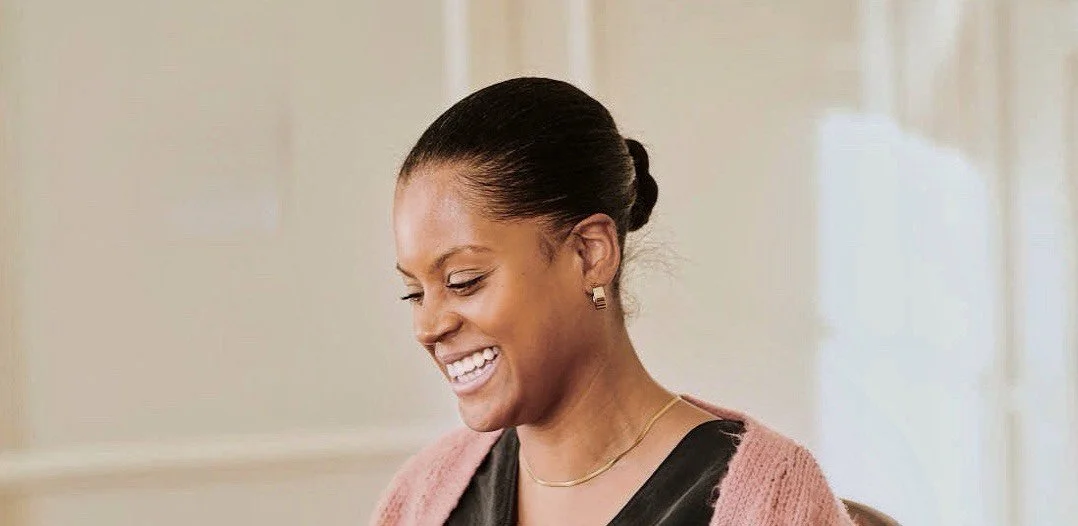
Photo credit Phill Taylor @philltaylormade
Kristy Ebanks | Director | Coldr
How did you get into marketing/comms?
I studied biochemistry, and one of my biggest career breaks was working as an international consultant at the Food and Agriculture Organisation of the United Nations. I was based in Rome, Italy, for a couple of years, and it was an incredible opportunity, but after spending much of my time working on food composition databases, analysing the nutritional value of green leafy vegetables commonly eaten in West Africa, I realised I wanted to explore where else life sciences could take me.
I decided to return to London and took a role as a publishing executive at the British Medical Journal, eventually working my way up to editor on BMJ Journals. While there, I saw firsthand the value of media engagement and how press-released research articles made their way into the national news, and that sparked my interest in media - the rest is history.
What is something that you do every day without fail?
Move my body! Weightlifting, walking, running (lots of running). This keeps me grounded. It’s unapologetically my time: when I go for a run, people respect that space; they don’t call or expect much from me. I wear a lot of hats, and somehow, lifting heavy bits of metal at the gym or running while listening to slow jams (yes, it’s a thing) keeps me sane.
What is the best piece of advice that you’ve received? And who gave it to you?
“Go and read your book.” My parents said it to me, and now I say it to my little ones. It turned out to be great advice: go and learn, go and be curious, gather knowledge the way a squirrel gathers for harvest.
When you read, you build the ability to hold conversations on a range of topics, to think critically, to know where and how to find answers. You learn to express yourself, to listen, and to communicate. You begin to understand perspectives, feelings, and the impact of your own words.
That’s how you grow and get better - through curiosity, reflection, and learning. Curiosity didn’t kill the cat; it turned it into a lion.
What is a tool/hack that you would recommend to anyone starting out in PR/Comms/Marketing?
Comms is a noisy space - everyone has something to say. We’re all communicators after all, but what’s your special skill? What’s the unique value you bring to every project you touch?
I’ve often been told (and it makes me blush a little to admit) that I’m “an asset wherever I go.” There’s real power in understanding the ‘why’ behind a compliment like that. What’s your niche? What makes you stand out? Is it your ability to communicate with a variety of audiences - speaking both corporate and culture fluently? Are you an innately strategic thinker? Whatever it is, recognise it, refine it, and lean into it.
What’s your greatest achievement to date?
Don’t say ‘Covid comms’... I have to say it, don’t I? Who in healthcare doesn’t reference it? It’s got to be navigating Covid messaging - what a ride. I was at the Royal College of GPs when it started, and I remember going to a live Bloomberg interview with the RCGP chair at the time. We got to the City and were one of maybe three people around; it felt like a scene from a dystopian movie.
During Covid, I moved to the British Medical Association, and the heat really turned up, but I embraced it. I worked on complex, constantly changing messaging that had to be accessible and timely. I remember pressing for vaccine uptake messages that acknowledged historical mistrust and past failures, all while being in lockdown, experiencing the same fears as the public, and navigating Covid in my own life.
Then came the resurgence of BLM, and I led on crafting messages around racism in medicine. It was intense - long hours, combating misinformation, and feeding in lived experiences. Followed by doctors’ industrial action in the space of five years, I developed crisis comms skills that would typically take a lifetime to acquire.
So the short answer is: being unflappable during crisis moments. I was once told that people in our industry could have a 40-year career and never experience the kind of crisis comms I worked on in just half a decade.
Is there a particular comms campaign that you’ve seen in your career that you didn’t work on but wish you had?
Oh, what a question. Change4Life. It was launched by the Department of Health in 2009 to address childhood obesity in England. The goal was to help families make small, manageable changes to diet, activity, and lifestyle. Looking at it with 2025 eyes, the graphics are a bit ‘meh’, but the campaign was targeted at communities disproportionately affected by obesity, with simple, accessible messaging grounded in community insights, such as surveys from Mumsnet, and practical guidance like ‘make a swap when you next shop’.
It moved the conversation beyond ‘eat healthily’ and gave families specific, actionable ideas, including sugar swaps and 10-minute activity challenges. The roll-out was wide-ranging, from schools to hospitals, and the campaign leaned heavily on behaviour-change principles, promoting small steps rather than big lifestyle overhauls.
It won numerous awards and is still cited as a best practice example in behaviour-change public health communications.
It wasn’t perfect. The menu cards were very UK-diet focused and didn’t fully reflect the country’s diverse palate. As the years went on, additions such as the voucher scheme fell a little flat, until the campaign was eventually rebranded in 2021 alongside the Public Health England rebrand. But the initial concept was beautiful: Eat well, move more, and live longer.
In three words, describe your approach to your role/work?
Can I be cheeky and give four, please? Strategic, goal-focused, timely (and agile - you have to be able to pivot without losing focus).
What’s a question every PR/marketing pro should ask themselves?
Who am I trying to reach and why? Once you have a deep understanding of your audience, ask yourself ‘How do I get this group to understand me?’ Every single project should be grounded in ‘audience’, it’s the foundation of effective communication.
